

Showing posts with label Gadget. Show all posts
Showing posts with label Gadget. Show all posts
Mar 3, 2015

Feb 8, 2015
World's First Ubutnu Phone Wants To Shake Up The Home Screen

The BQ Aquaris E4.5 Ubuntu Edition will be the world's first Ubuntu Phone when it goes on sale in Europe on Monday 9 February, after years of false starts and broken promises.
Feb 6, 2015
Mouse-Box — An Entire Computer inside a Mouse

Smartphones in our pockets are exponentially smaller and more powerful that they don't realize the need to carry laptops with us everywhere. Now imagine if a small mouse meets the need of the entire PC? Not just imagination, it has been proved and done by the engineers at a Polish startup.
Feb 1, 2015
The Case That Turns Your Phone Into A Polaroid Camera Is Now On Kickstarter

The Prynt case, which lets you print photos directly from your phone, is now available for pre-order on Kickstarter. While the startup still plans for its case to retail for $99, early backers can get it for $49.

Jan 31, 2015
Microsoft Launches HoloLens – The Future of Technology?

Jan 18, 2015
80% Of All Online Adults Now Own A Smartphone
80% Of All Online Adults Now Own A Smartphone, Less Than 10% Use Wearables
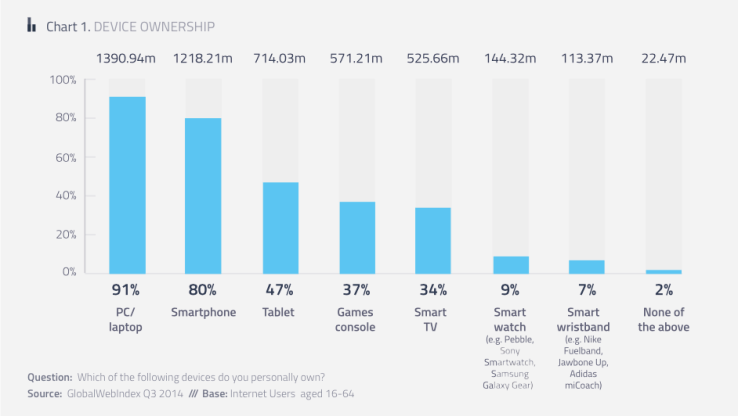
If people are looking to Apple and its new smartwatch to kickstart wider consumer interest in wearable computing gadgets, the maker of the iPhone will have a lot of work ahead of it.New research out from the GlobalWebIndex indicates that in a survey of 170,000 adult internet users across 32 markets, only 9% report having a smartwatch, and 7% said they owned smart wristbands. In contrast, among online adults, 80% now own a smartphone.
The proportion of smartphone ownership has reached a new high, but it has not yet overtaken legacy ownership and usage of PCs, which is currently at 91% of all online adults.
Some other interesting data points highlighted in GWI’s research:
– Wearables. Within the wearables category, the biggest number of device owners are affluent males in the 25-34 year-old group who reside in the Asia Pacific region. This points to these smaller, portable and more narrowly functional devices continuing their market placement as niche products that have yet to find a groove to appeal to a wider range of consumers.
– Platform ‘wars’ are over and Android won. Breaking out how different mobile platforms are performing in the smartphone and tablet sectors, it’s no surprise to see that Android is firmly ahead of iOS. What’s interesting to see, however, is just how far they have diverged and when.

We have heard various market analysts point out that Apple’s iPhone sales have seen a big bump in the wake of the launch of the iPhone 6 models, but it’s not clear that the ownership picture as depicted by GWI supports that.
While Android was creeping up quarter on quarter, the difference between Q2 and Q3 noticeably got flatter, which could indicate slowing sales, except that the iPhone numbers appeared to flatten/increase only very slightly.
In other words, if there has been an impact, it will have to be sustained by Apple to show any meaningful shift in ownership. As it stands now, Android’s 54% share represents a 38-point lead over iPhone/iOS, with the gap widening.
Back in 2011, the ratio of Android to iOS users was just under 2:1; in 2014, it has increased significantly to approach 3.5:1, GWI notes.
Whether that divergence will ultimately start to play out in where developers invest their time and efforts will be the really important question for users (and Apple).
– Tablets. In tablets, to me the most interesting point is a historical one: we like to talk about how Apple and the iPad dominate tablets, and while that may be the truth as far as the single brand is concerned, when it comes to platform dominance, Apple hasn’t been in a leadership position since Q4 2011, and really dropped away from a close position in 2013.
– Mobile internet use. GWI says that 75% percent of smartphone users are accessing mobile internet services on their smartphones — meaning a whole 25% are still not. The average amount of time that people are spending on their mobile devices is 1.85 hours/day, up by about 40 minutes on 2012. Because emerging market consumers often replace PCs with phones, they are using those phones the most, on average at more than three hours/day in the Middle East and Africa.
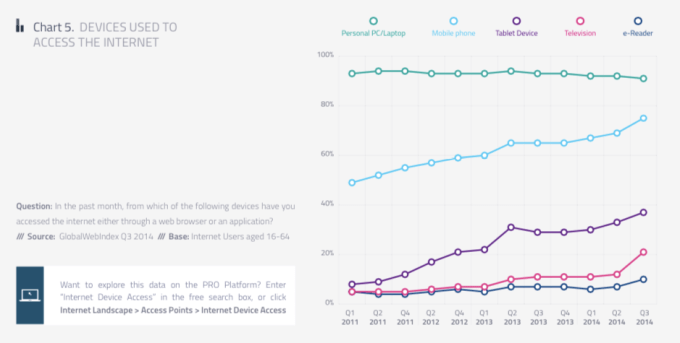
As you can see in the chart, mobile is used for Internet access far more than tablets, TVs and e-readers, but as with device ownership, it’s not yet passing PC/laptop usage, which is around 90%.
– VPNs, popular content. GWI also delves into what kinds of content is being consumed on the Internet access front, and how users are getting to it. The rising tide of restrictive firewalls in some markets has led to increased usage of VPNs to access the Internet. These VPNs effectively let you appear on the Internet as if you are somewhere that you are actually not. Currently, GWI says that some 27% of respondents, of 400 million users, say that they have used VPNs to go online, with China alone accounting for 150 million people.
Among those users, they are unsurprisingly significantly more avid online consumers of content than those not using VPNs. Google Play scored the highest of all services accessed by VPN and regular Internet users, who would be turning to the search giant’s store not for apps but for video and audio and gaming content.

Why Is Apple Going To Have A Better Time Launching A Wearable?
Why Is Apple Going To Have A Better Time Launching A Wearable?
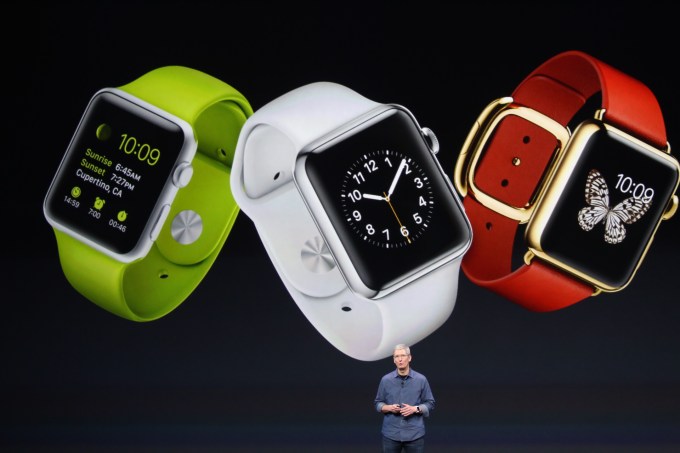
At some point in the next few months (“Early 2015″ can’t push much past March, can it?), Apple will release its Watch, likely defining the high end of the wearable category.
The Apple Watch is, in hindsight, exactly what Apple would make when entering a new category: a general purpose computer trimmed down to the essentials needed for its particular form factor. It shares its industrial design with its bigger cousins in your pocket, likely shares the same underlying UNIX operating system, and starting this year will even have its own native apps.
Analysts think that it’s going to sell somewhere in the range of 30 million units in its first 12 months — nowhere close to the range of the iPhone or iPad today but still incredibly impressive for the wearable category overall.
Analyst predictions of Apple sales can always be taken with a grain of salt, but especially so in the wearables category, where no one really knows anything yet anyway.
We only bother looking at analyst predictions because they are a reflection of broader expectations for how the Apple Watch will do. Despite launching well after Android Wear and Samsung’s very early attempts at making smart watches, consumers and Wall Street alike seem to be looking at the Apple Watch to set the tone for the wearables market in the same way that the iPhone and iPad did for smartphones and tablets, respectively.
Why the expected success, in the face of competition whose devices offer roughly the same functions?
If you take a look through the Watch Kit Apple released to developers back in November, the apps iOS developers can make for the Watch today are not far off from what’s available on the Android side of things. At launch, there’s going to be a lot of actionable notifications and functions that work in unison with apps on your phone.
So why does everyone think the Apple Watch is going to do so well compared to the current slate of smart watches available on the market?
First, there is a matter of momentum. Apple has spent a lot of time capturing a market, teaching them the benefits of their ecosystem and locking them in. A certain segment of those people will buy the Apple Watch regardless of what it may or may not do for them.
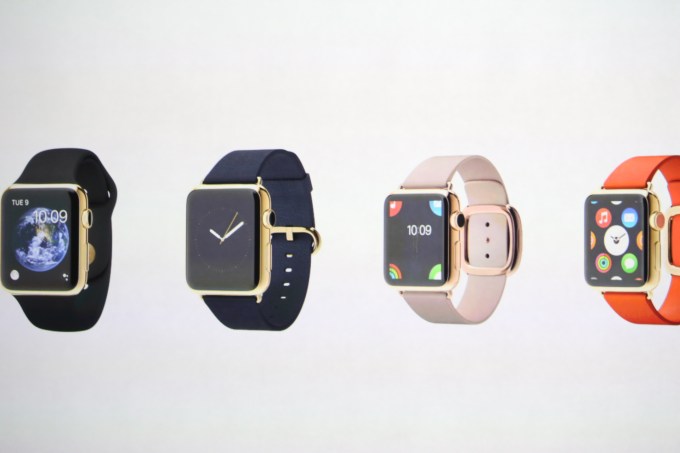
Millions of people will buy the Apple Watch because just owning it will seem cool.
Independent analyst Neil Cybart captures that rather well in this blog post. Basically, people will project their own reasons to be interested in the Apple Watch:
Over the past few months, I’ve learned to change the way I explain Apple Watch to friends and family. Instead of starting out with a list of reasons why they may enjoy an Apple Watch, I now begin with a pretty simply explanation: Apple is making a watch with customizable faces and bands. I then let that person respond, and depending on their answer, I mention how Apple Watch can serve as a communication device, a health and fitness tracker, or a mobile payment facilitator. As a result, I now get a much more open response from people that want to see and learn more about Apple Watch. That is how Apple will sell Apple Watch.
Going beyond that simple assumption, Apple is the best in the business at creating narratives around the products they sell. Of course, Google did a fine job of bringing in developers to come up with use cases for Android Wear when it debuted at Google I/O: “Too drunk to order a Lyft from your phone? Yell at your wrist instead!”
In fact, there was quite a bit of overlap in functionality between what Google showed off with partners on that day and the apps Apple presented on stage last September.
But Apple has proven with every “new” product category introduction that it knows which features a lot of people will need to justify a purchase. With the iPhone, it was a phone, iPod, and internet device. With the iPad, it had made a powerful computer that could handle productivity software but also provided a better book-reading/movie-watching experiencethan any single-user device before it.
Even though several Android manufacturers beat Apple to market with tablets between the iPhone and iPad launches, Apple thrashed (and continues to dominate) the category in profitability. That ownership (regardless of its long-term future) started with filling basic needs that would make their devices compelling.
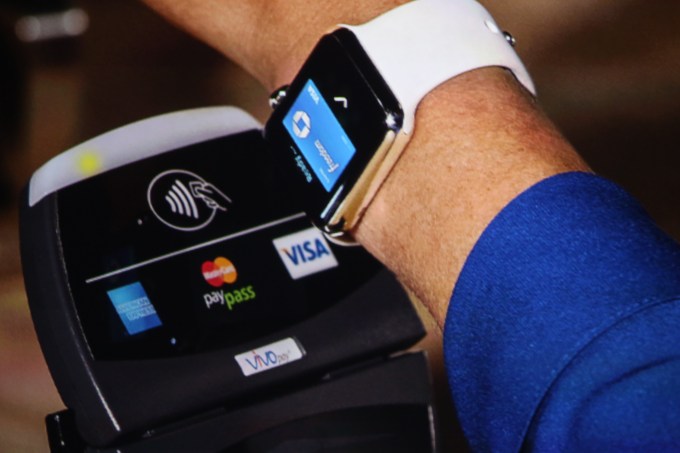
The Apple Watch opens up Apple Pay to those without the latest iPhones.
There’s reason to believe that Apple will do the same when it officially launches its Watch. TechCrunch has heard from several sources that Apple has brought in developers of apps that “obviously” need to be on the platform.
Companies like Facebook, Twitter, and Pinterest are being courted in order to make sure their apps are up to snuff for launch. We’ve also heard that Apple has been reaching out to smaller developers it likes, requesting video demos of apps running in the Apple Watch simulator. Some of these will likely end up as key part’s of Apple’s narrative just as Pixelmator wasfeatured so prominently in the debut of the new iPad Air 2, setting the tone for Apple’s new ads.
All of that is to say Apple will have a reason ready for consumers to buy their fancy new watches as soon as they’re made: a decent suite of launch apps.
From there, its success is essentially limited by whether or not it’s cool enough to significantly expand the size of the smart watch market. As Creative Strategies analyst Ben Bajarin wrote last week, there are two obvious outcomes for the Apple Watch: it either completely owns the space like its spiritual successor, the iPod, or it dominates the high-end of the market while bringing in a rather small portion of market share, losing out to cheaper Android Wear devices and fitness trackers going for much less.
Why isn’t there a third option, where the Apple Watch is a total dud? Well, that’s still a possibility if the wearable category as a whole is something that every company thinks is a good idea but really no one wants. I don’t think that’s the case.
In addition to the advantages above, Apple also has the fact that it will probably be the only viable truly premium option in town. It’s going to have a solid-freaking-gold option, for goodness’ sake.
As blogger Matt Richman wrote last week, there’s no way Apple will open up the functionality that will make the Apple Watch so attractive (the connection to the iPhone at the operating system level) to anything but its own Watch. Actual luxury-watch makers will have to rely on Android Wear if they want to compete, which will only work with Android phones… which wealthy people, as a category, don’t buy. If there’s even a bit of a smart watch market, Apple will assuredly take the high end of it.
Device Alert
This Fake Phone Charger Is Actually Recording Every Key You Type
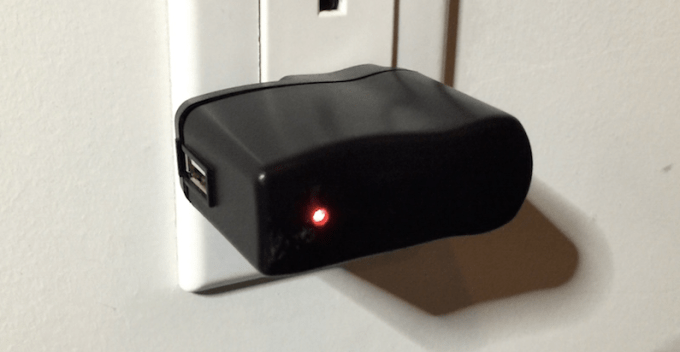
“Whose phone charger is that sticking out of the wall? Oh. It must be Ben’s. Ben always leaves his charger at work. Classic Ben!”
Alas, it’s not Ben’s charger. Hell, it’s not a charger at all. It’s actually a little spy device disguisedas a phone charger, capable of sniffing out every key you type on that wireless keyboard on your desk. Oh, and it can send the stuff it picks up straight to the eavesdropper’s phone. Oh! Oh! And it’ll keep working even if you unplug it — it only pretends to turn off.
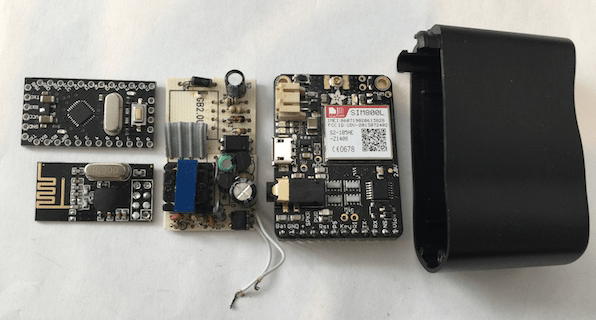
That little box up top is built by Samy Kamkar (Yeah — the same Samy who built the self-titled worm that ravaged Myspace back in the day, and who built that crazy hands-free hacking necklace a few weeks back) who has dubbed it the “KeySweeper.”
Before you panic and throw your keyboard in the trash, here is the good news: This specific device only affects certain wireless keyboards. Most notably, Microsoft-branded wireless keyboards. We’re still trying to dig up a more exhaustive list — but for now, let “Microsoft wireless keyboard” be your caution sign.
In a statement, Microsoft notes that it only affects its 2.4 Ghz (not Bluetooth) keyboards released before July 2011 (Update: See the bottom of this post for a note on this from Samy, the man behind the hack). Even if it’s “only” older keyboards, remember: outside of the gamer crowd, most people don’t update their keyboards very often.
Here’s some of the crazier stuff KeySweeper can do:
- Sniff out keystrokes as you type them.
- If it detects certain keystrokes (like “TopSecretWebsite.com”), it can grab the chunk of text that follows (like your username and password) and send it over SMS to whoever planted the device.
- Store keystroke logs on the device itself. These logs can be extracted from the device by hardwired USB, or by putting a second KeySweeper device within range of the first (like, say, an outlet on the other side of the wall).
- When plugged in, it grabs its power from the wall.
- When unplugged from the wall by an abnormally suspicious bystander, it looks like it powers down — but it actually just switches to battery power. Logging/sending continues. Naaaasty.
On the upside, most brand-name wireless keyboards sold today use encryption methods that are a bit tougher to crack. Logitech, for example, uses 128-bit AES on all of its wireless stuff (see page 6 of this doc for reference).
Samy estimates that each unit would cost $10 to $80 to build, depending on what sort of features you want (ditching the SMS support, for example, brings it down by about $45) — but is quick to note that he’s not actually selling these.
You can (and should!) read Samy’s full breakdown of the project over here.
Update: While Microsoft says only keyboards before July 2011 are impacted, Samy shot me a note to point out that said keyboards are still on sale and seemingly manufactured:
Just wanted to mention — while Microsoft states it only affects keyboards before 2011, the vulnerable keyboards are *still* being manufactured and sold today, even from Microsoft’s own web site and major retailers like Best Buy.I purchased the vulnerable keyboard brand new from Best Buy just last month, and the date next to the serial number says “07/2014″
Samsung's New 5.5-Inch Galaxy A7 Smartphone
Samsung Packs An 8-Core Processor Into Its New 5.5-Inch Galaxy A7 Smartphone

Last year Samsung released an eight-core version of the Galaxy S5, and now it has outed a dedicated octocore smartphone in its own right: the Galaxy A7.
Korean firm teased the phone in 2014 and showcased it last week, according to a report, but now it is official with dual 1.8GHz and 1.3GHz quad-core processors (or 1.5GHz and 1.0GHz in the dual-SIM version) and a 64-bit Qualcomm Snapdragon chip. Those eight cores are great for handling multiple tasks, on paper, and are backed up with 16GB of memorystorage, 2GB of RAM and a large 2,600mAh battery.
There’s no word on launch dates, initial markets or pricing, although reports last week pegged it at around $420 off contract.
The phone runs Android KitKat and sports a 5.5-inch screen, making it larger than the Galaxy A3 and Galaxy A7 that were announced back in October. Like those two products, it is another slim, metallic bodied release from Samsung, which has long been criticized for using all-plastic bodies, including faux leather.
Samsung has again focused on appealing to cameraphone enthusiasts. There is a 13-megapixel rear-facing camera and a 5-megapixel front-facing camera. On the software side, the Galaxy A7 software that Samsung claims can take a ‘wide’ selfie, while ‘auto selfie’ lets narcissists snap themselves using “a voice command or even a simple wave of the hand” –selfie sticks be damned.
Samsung is also touting ‘Always Clear Voice Auto Control’ which reduces background noise in-call, multiple screen support for apps and a private mode that “adds an extra layer of security for important files and documents.”
The introduction of the Galaxy A3, A5 and A7 over the past few months is interesting: Samsung is diversifying its focus beyond its flagship Galaxy S and Note families. The company is bracing itself for its first profit drop in three years, and its latest Galaxy S5 and Note 4 don’t appear to be selling as well as previous models.
The Galaxy A3 and A7 were pretty focused on China, as we noted last year, but Samsung is birthing a new series of phones that offer something else to consumers. With a distinctly different design, marketing focus and lower prices, the Galaxy A series looks to be its Xiaomi-like effort at bringing a quality experience to the mid-range of the smartphone market.
Subscribe to:
Posts (Atom)